Trial matching is a coordination problem.
Sponsors write protocols. Sites estimate eligible patients from memory. Coordinators comb charts by hand. Patients hear about trials from ads, not their own doctor. Nobody owns the routing. We built Safar to sit there.
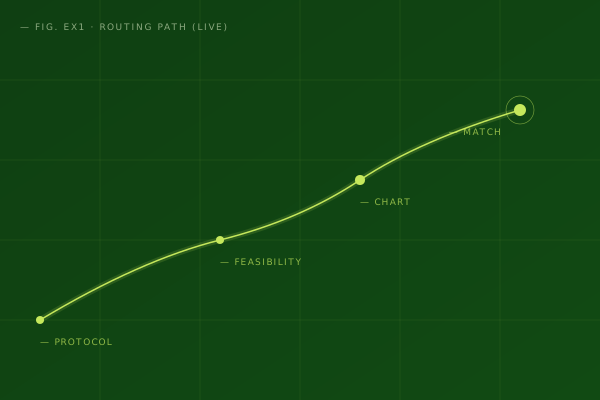
Every match traces a path: protocol to feasibility to chart to clinician. We make each step a logged event.
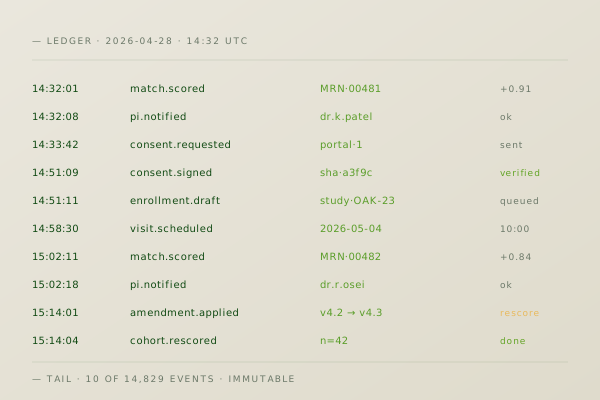
Timestamped matches. Recorded consents. Auditable amendments. The artifact your monitor actually wants.
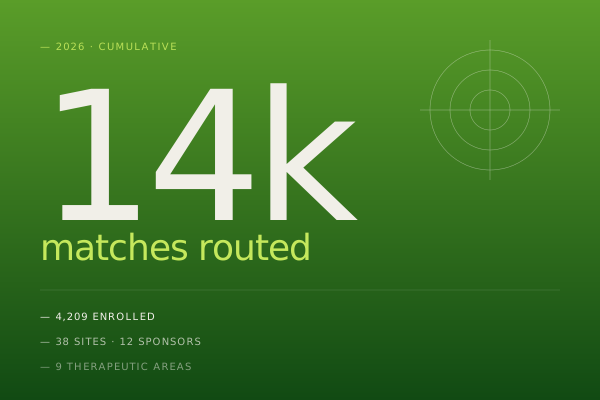
Routed, reviewed, consented. The right patient reaches the right study through their own care team.
The eligible patient already exists. They are sitting in a clinic, in a chart, with a doctor who knows them. Trial matching isn't a discovery problem. It's a routing problem. Until we treat it that way, the right patients keep missing the right studies.
How we work — in six lines.
The model on the left is the routing graph: a sponsor protocol parses, lands in the chart, the care team signs off, the patient signs in. Six rules govern every transit.

Routed, not broadcast
A trial doesn't need another email blast. It needs to land on the one chart where it applies.
Clinician in the loop
The care team sees every match before the patient does. No cold outreach.
Inside the EHR
Epic, Cerner, Meditech. We work where care already happens.
Audited by default
Every match is timestamped. Every consent is recorded. The ledger is the product.
Patient-controlled consent
The patient authorizes disclosure, not the vendor. We never move PHI without a signature.
Quiet
No noise, no dopamine, no leaderboards. The best workflow is one you don't notice.
A team of clinicians, engineers, and regulators.

Physicians who have sat through the screen-fail meetings we're built to prevent.
FHIR and HL7 specialists who make charts talk to each other.
The people who write the audit responses sponsors actually read.
Built for patient records at scale, with consistency that holds up.
Coordinators-turned-PMs who know exactly where the friction lives.
The bridge between protocol writers and the clinics that run them.
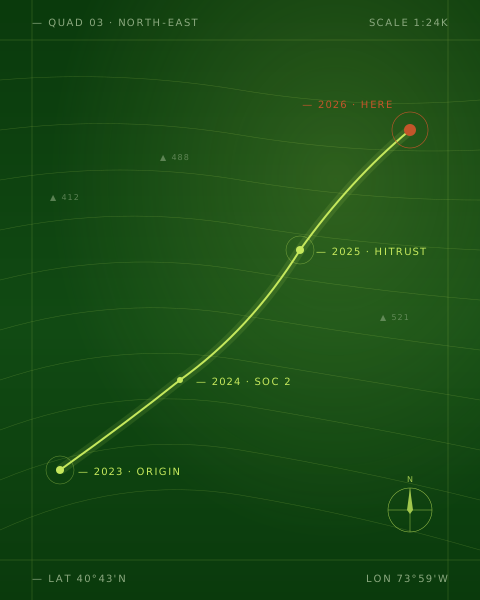
The journey so far.
Thirty minutes.
One protocol. A real match list.
Share a recent protocol under NDA. We'll return a cohort sketch drawn from de-identified records before the follow-up.